
Mesh Design
Its influence on aerosol performance and drug delivery
12. August 2026

In a vibrating mesh nebulizer, the design of the mesh plays a critical role in aerosol generation.
Its geometry, material properties and vibration behaviour all influence how the liquid passes through the microscopic openings and is transformed into an aerosol.
For pharmaceutical development, understanding these mesh characteristics is therefore an important part of understanding and optimising the overall drug-delivery system.
The mesh is at the heart of aerosol generation
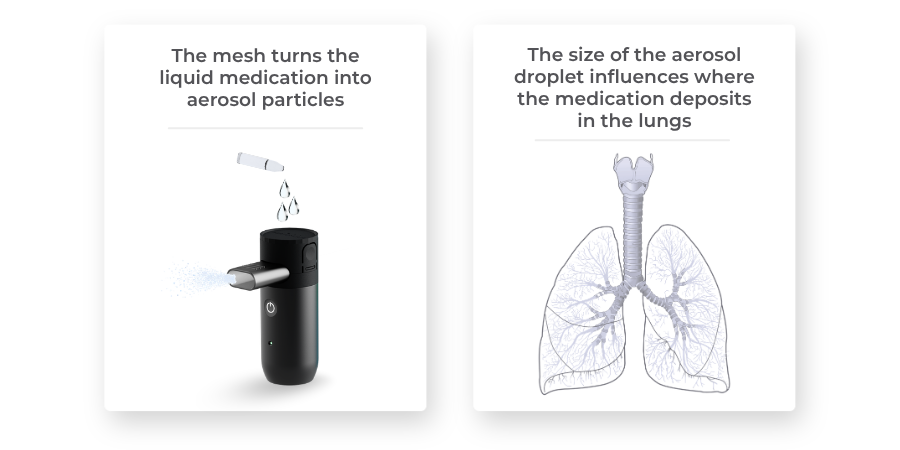
A vibrating mesh nebulizer creates aerosols by driving the liquid medication through thousands of microscopic openings in the mesh. As the liquid passes through these openings, it is transformed into droplets that form the aerosol.
This makes the mesh much more than a mechanical component. It directly influences how the liquid leaves the device, how droplets are formed and, ultimately, the characteristics of the aerosol reaching the patient.
Droplet size is particularly important because it influences where medication is deposited in the respiratory system.
This is why even relatively small differences in mesh design — such as the size of the openings, their distribution, mesh thickness or material properties — can have a measurable impact on nebulizer performance.
What makes one mesh different from another?
At first glance, different meshes may look very similar. At the microscopic level, however, their geometries can be quite different.
1. Size of the mesh holes
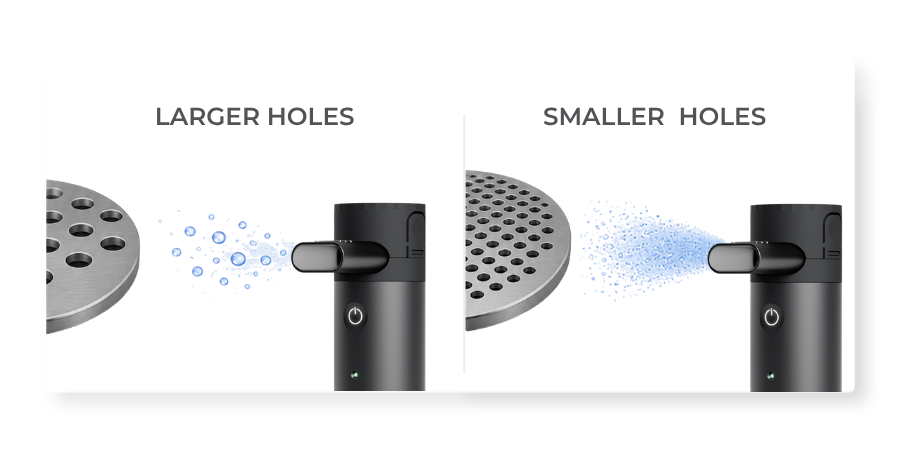
One of the most important characteristics is the size of the holes. The geometry of these holes influences how the liquid passes through the mesh and contributes to the resulting droplet characteristics.
2. Hole density/number of holes
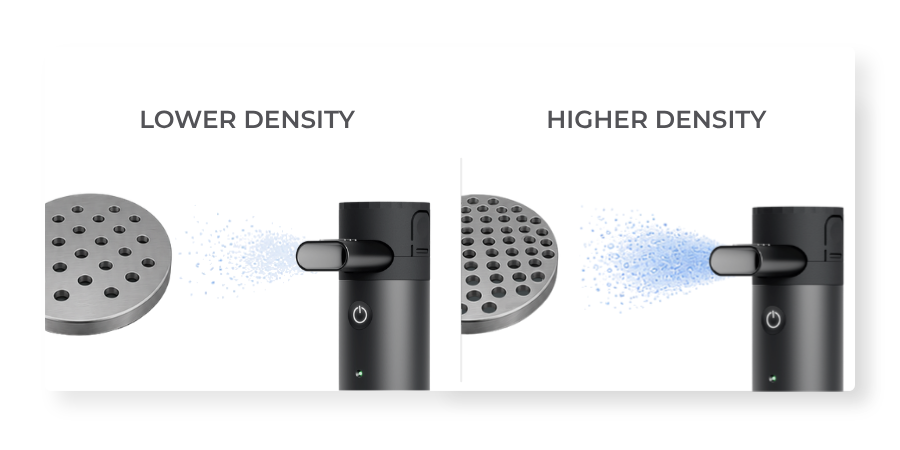
The number and distribution of holes also matter. A mesh with a higher number of holes can allow more liquid to pass through the mesh at the same time, potentially influencing aerosol output.
3. Mesh thickness
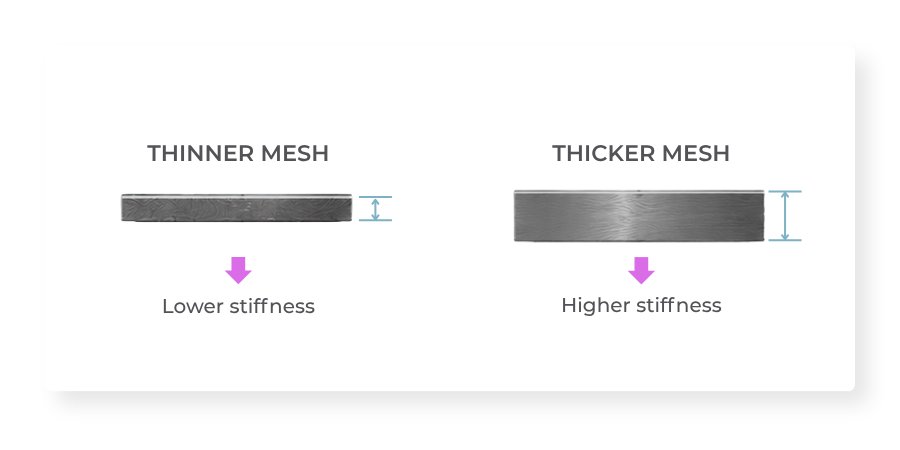
Mesh thickness is another important parameter because it affects the flow path of the liquid through each opening.
4. Mesh material
And finally, there are the material properties of the mesh. Its mechanical characteristics influence how the mesh responds to vibration. Changes in stiffness or other material properties can therefore affect the way liquid passes through the microscopic openings and, consequently, the overall aerosol generation process.
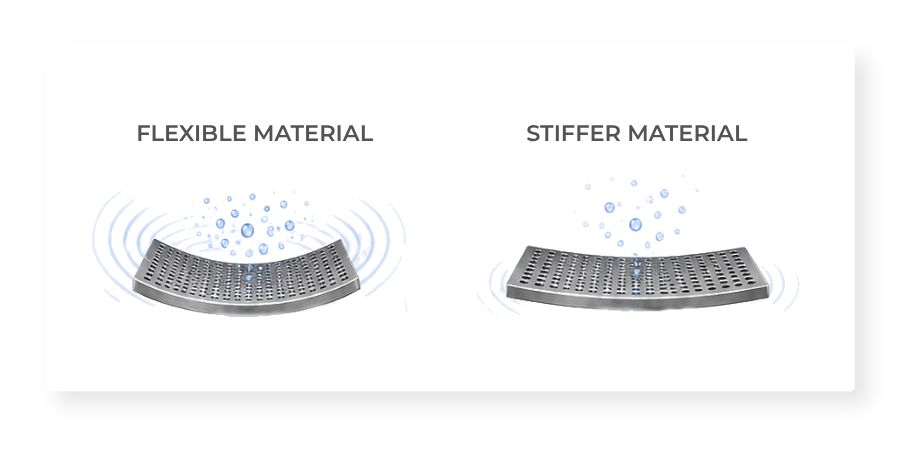
The key point is that these parameters do not work independently.
The goal is not to optimise one parameter in isolation, but to find the right combination of mesh characteristics to achieve the desired aerosol performance.
The details you can’t see
To the naked eye, a mesh may simply look like a thin metallic disc. In some cases, the openings are so small that they cannot be seen at all.
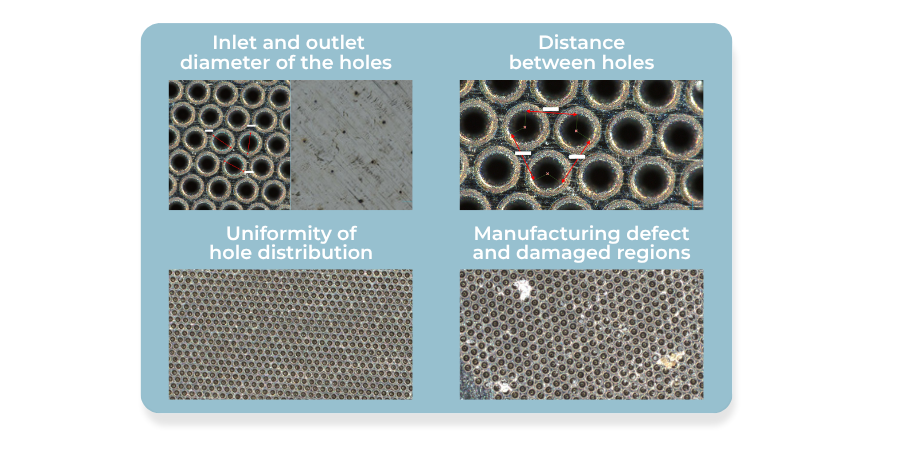
Digital microscopy reveals a much greater level of detail.
- At the microscopic level, it is possible to examine and quantify details such as the inlet and outlet diameter of individual openings, the distance between neighbouring openings, the shape of the openings and how uniformly they are distributed across the mesh.
- Microscopy can also help identify manufacturing variations, defects or damaged regions that would otherwise remain invisible.
This information is valuable because even small variations at the micrometre scale can influence how liquid moves through the mesh, and therefore how the aerosol is generated.
Why does this matter for pharmaceutical development?
Not all formulations behave the same way.
Some formulations are more viscous. Others have different surface tension characteristics, while some may contain suspended particles rather than being simple solutions.
These differences can affect how a formulation interacts with the mesh and how effectively it can be converted into an aerosol.
As a result, a mesh design that performs very well with one formulation may not necessarily provide the same aerosol performance with another.
The same principle applies to the therapeutic target. Depending on the intended site of deposition, different aerosol characteristics may be desirable. For applications targeting the upper airways, larger droplets may be appropriate, while formulations intended to reach the deeper regions of the lungs generally require smaller aerosol particles.
This means that mesh selection should not be considered independently from the formulation or the intended therapeutic application.
Matching the mesh to each medication
The mesh may be a small component, but its design can have a significant impact on the final aerosol.
By understanding the relationship between mesh geometry, formulation and device behaviour, it becomes possible to select and optimise the right combination for a particular drug-delivery application.
➡️ If you are interested in finding the optimal drug-device combination, contact us at partnering@pulmotree.com