
Guided inhalation for targeted pulmonary drug delivery
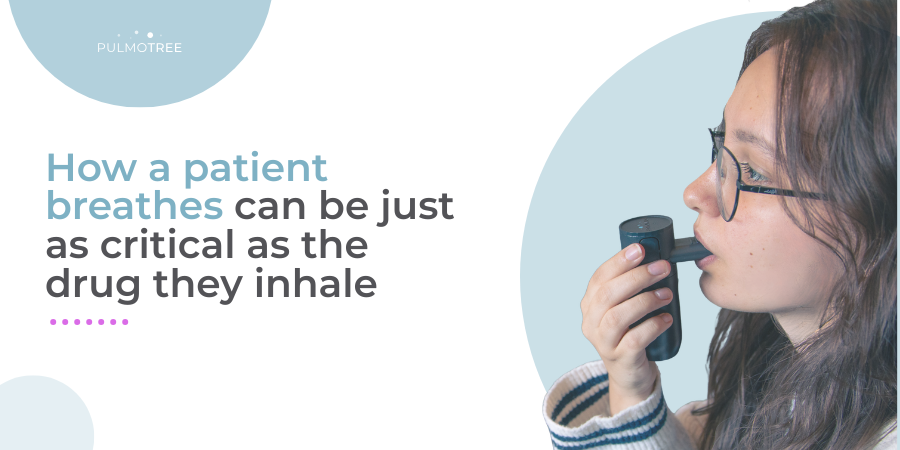
How a patient breathes can be just as critical as the drug they inhale
30. July 2026
Written by: Carolina Dantas (Medical & Scientific Affairs)
The breathing manoeuvre influences lung deposition
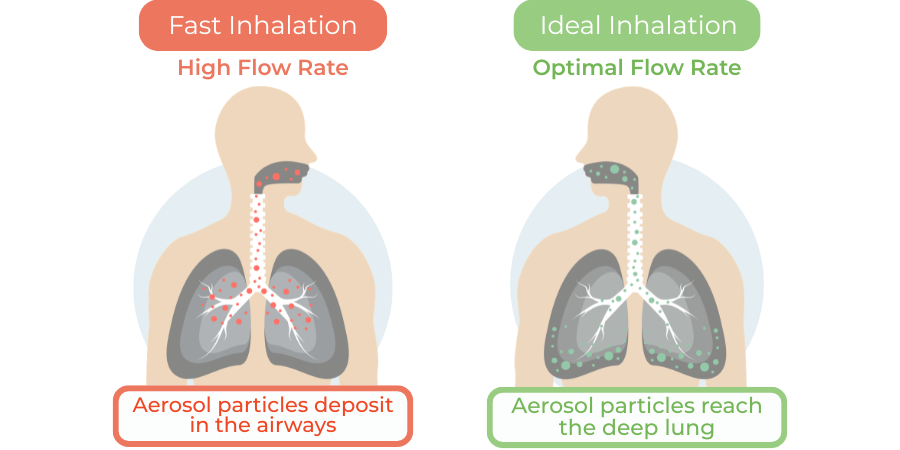
Inhalation technique has a major impact on where aerosol particles deposit.
When patients inhale too fast (>15 L/min), particles are more likely to deposit in the upper and conducting airways rather than reaching the lung periphery. Consequently, the same drug delivered with the same device may produce markedly different clinical outcomes.
Real-time guidance helps patients stay in the target flow range
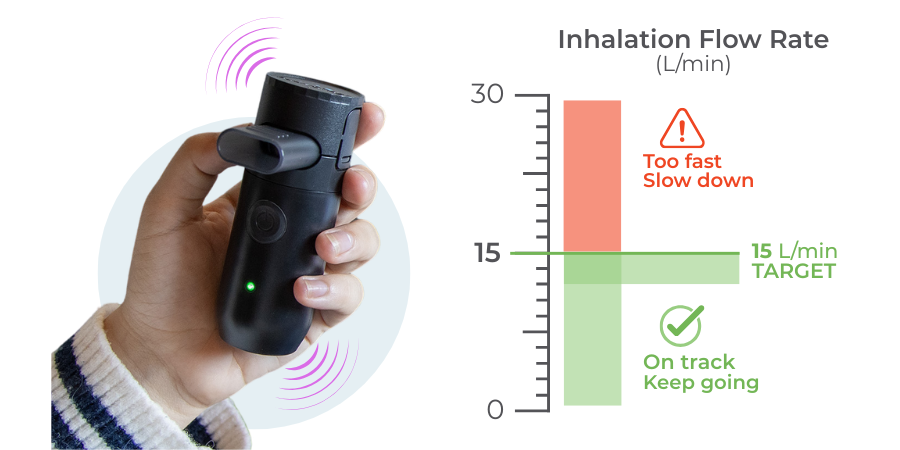
This is exactly what our Kolibri™ Mesh Nebulizer is designed to address. By providing real-time haptic feedback, the Kolibri™ guides patients toward an optimal inhalation flow rate through positive and negative feedback. Nebulization occurs only within the target flow window, promoting more reliable and consistent drug delivery conditions.
It works, even for first-time users
Enabled by the Kolibri™ Mesh Nebulizer.
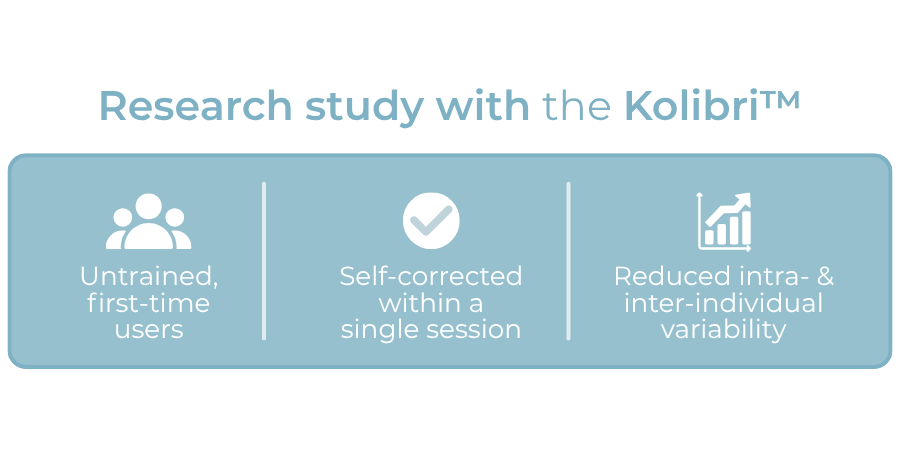
🔬 In a study, we put this to the test with untrained, first-time users. Most participants maintained their inhalation flow below the 15 L/min threshold, while the real-time feedback measurably reduced both intra- and inter-individual variability.
📉 Even participants who initially exceeded the target range were able to self-correct within a single session.
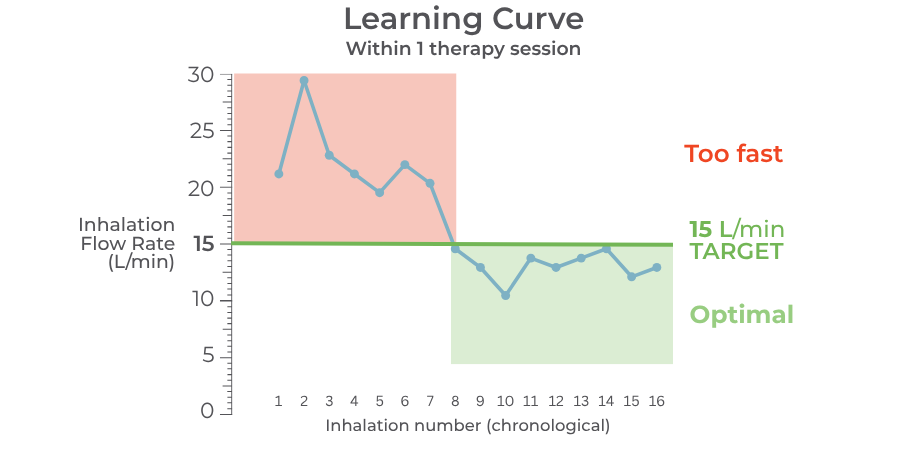
 Dantas C et al. RDD Online (2024)
Controlled breathing means controlled drug deposition
Turning nebulizers into precision platforms.
Today´s benefit:
✔ Reproducible inhalation
Tomorrow’s opportunities:
✔ Real-time breathing data
✔ Digital biomarkers
✔ Lung deposition modelling
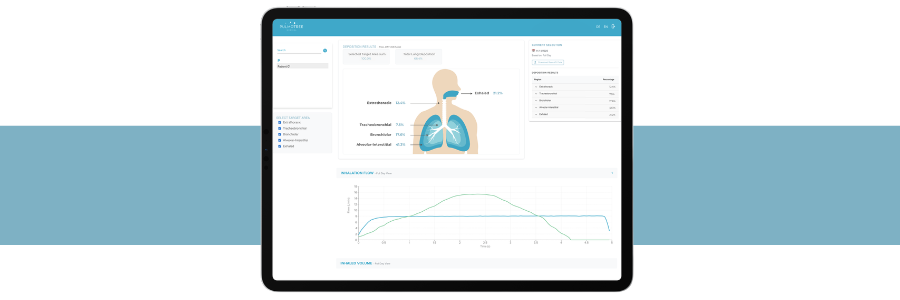
💭 What could become possible when real-time breathing data is combined with lung deposition modelling?
➡️ Learn more about the Kolibri™ Mesh Nebulizer or reach out to partnering@pulmotree.com to explore potential collaboration opportunities.